AI is the Second Coach in the Room — Not the First
Most reps prompt AI for confirmation on a stuck deal. The version that actually moves deals is the prompt that pushes back — and it only works after the human room has put the context in.
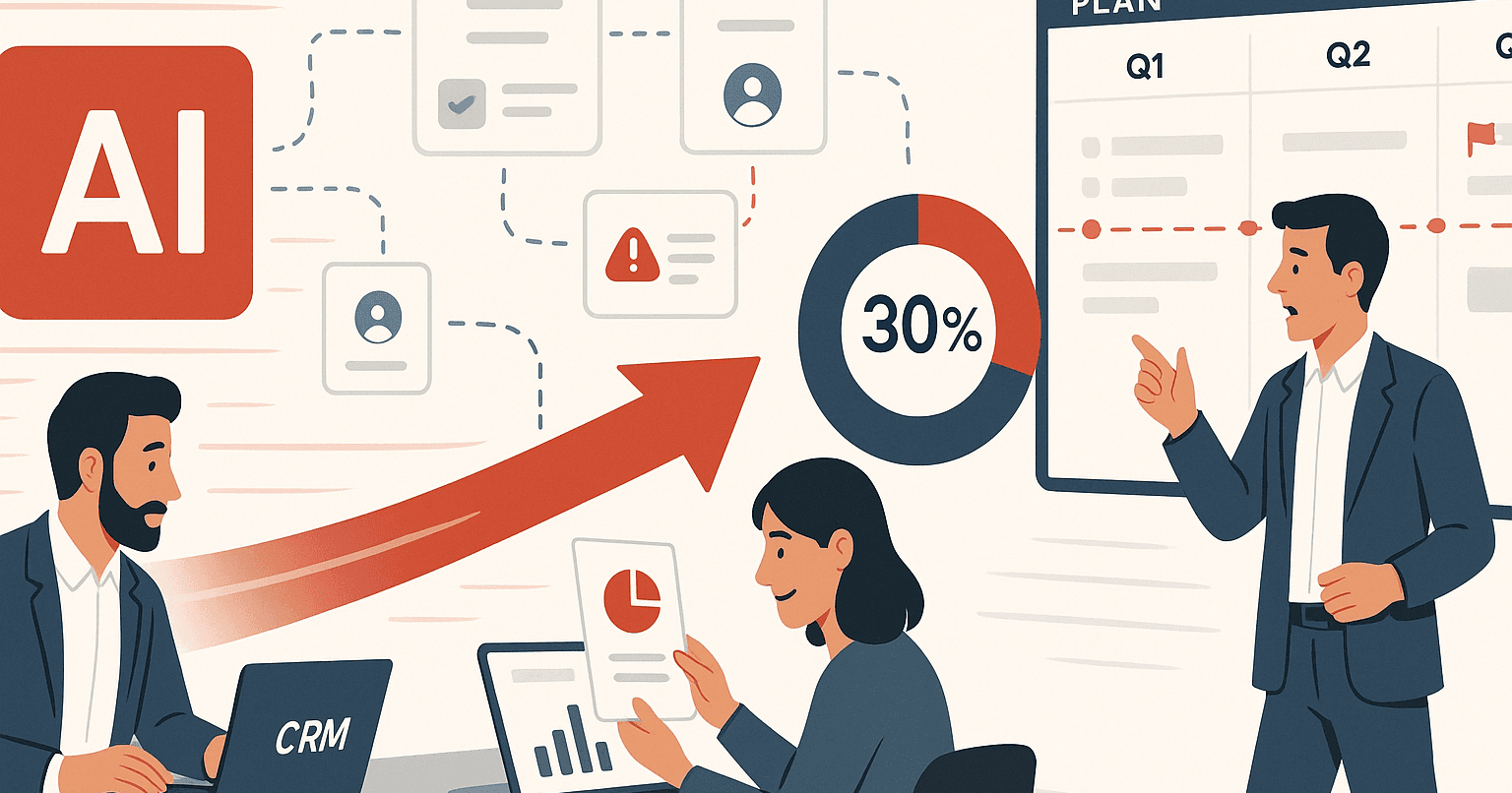
There was a specific stretch when deals stopped slipping at the last minute. Not because the reps got sharper or the buyers got more decisive. It was the stretch we started running every Stage-3-and-later opportunity through a MEDDPICC scoring prompt before the deal review. The model would mark the holes — the empty Champion field, the Economic Buyer who was actually a coach in disguise, the Decision Criteria that no one had sourced — and push back on the rep’s confidence anywhere the score didn’t earn it. The deals that used to evaporate in the last week of the quarter stopped evaporating. The pushback caught the wobble early enough to do something about it.
That isn’t a story about AI replacing deal coaching. The room — the manager, the peers, the senior voice with skin in the outcome — still had to do its work. What changed is that the rep didn’t walk in with their read on the deal untouched. AI had already pushed on it.
Most of the leaders I talk to are still trying to slot AI in as the first coach. Open the model, paste the deal, read the analysis. They are putting AI in the wrong seat.
Why the First-Coach Move Doesn’t Work
AI without context produces generic feedback. The output reads sharp on the page — well-organized objections, clean stakeholder maps, scripted next-step recommendations. The problem is that none of it is grounded in the deal you are actually working. The model is interpolating from training data about what a deal like yours usually looks like. The buyer in your specific deal is not the buyer-shaped average the model has in its head.
Generic feedback is the failure mode worth naming. It reads well, and you cannot tell from the page that it is generic. You read it, you nod, you implement on the most plausible piece, and three weeks later the deal slips for a reason the model never had context to surface.
In practice, there’s real difficulty in giving AI useful context cold. Your buyer’s personality, the off-camera things they said when the screen-share dropped, the fact that the IT director was nodding at the CFO instead of you during the demo, the political read between the VP of Operations and the CFO that you picked up across three meetings — almost none of that is in the call transcript. The human read on the room is what AI cannot manufacture. Until that read is in the conversation, AI’s feedback is one rung above a Google search.
Which is why the order matters. The room loads the context first. Then AI gets to push on it.
What AI Is Actually Good At as a Coach
Once the context is in, the model becomes useful in a way that is hard to replicate at scale.
The good version of AI-as-coach is a sales manager or CRO who is quick to push back on assumptions, skipped steps, and weak language. They have seen the framework — pick one, MEDDPICC works fine — and they push hard when the score is low and the rep’s confidence is high. They name the missing Economic Buyer instead of accepting “they’re in the loop.” They flag a Decision Criteria field that is still a paraphrase of the rep’s pitch instead of a list of what the buyer actually told them. They notice the language slipping into hedge mode and ask for the exact words the prospect used.
You can prompt for that exact posture. The prompt has three load-bearing pieces. One, name the role: act as a sales manager who pushes back hard on assumptions, weak language, and skipped framework steps. Two, name the framework and the threshold: score this deal by MEDDPICC; anywhere the score is below 7 and the rep’s confidence is above 70%, escalate the disagreement specifically. Three, demand specifics: for every pushback, ask the rep to quote the buyer’s actual words, not their paraphrase.
That prompt produces a different output than “review this deal for me.” The first one is a confirmation request dressed as analysis. The second one is a coach.
The Two-Way Debate (The Part Most Reps Miss)
This is the piece most reps get wrong. They treat the AI exchange as a query — submit the deal, read the response, log the output, move on. The response feels like a verdict. They either agree and feel slightly worse about the deal, or disagree and discard the pushback.
That is not how the move works.
The version that produces sharper deals is a two-way debate. AI pushes back on the rep’s read. The rep pushes back on the AI’s pushback. The model challenges a stakeholder map; the rep names why the buyer’s behavior in the last call actually does support the read; the model adjusts and challenges a different line; the rep concedes a point and reworks the move on that one. Three or four rounds in, the rep walks away with a different read than they started with — and a clearer picture of which parts of their original read are still standing.
The conversation is where the work happens. The first reply is not the answer. It is the opening move.
Reps who don’t push back on the model end up with a worse problem than reps who didn’t use AI at all. They get a credentialed read that wasn’t theirs and isn’t grounded in the deal, and they execute on it because the output looked confident. False confidence at the rep level produces deal slippage at the org level. Same failure mode as the rep who never challenged their own read in the first place; the symptoms just take longer to surface.
Where This Breaks
I want to name the failure modes honestly, because the version of this that works is narrower than the version most teams will try to install.
Analysis paralysis is the first one. A rep with forty AI-generated objections has the same problem as a rep with forty stakeholders to map and no manager to help them pick. The framework is doing work the rep is supposed to do. The AI coaching pass should produce three to five moves, not a dissertation. Prompt for prioritization. Refuse drafts that don’t deliver it.
Deference is the second one, and it is worse. A rep who treats the model’s output as gospel has installed a new authority figure into the deal without earning the right to overrule it. The two-way debate is what protects against this, and the discipline of pushing back has to be taught. Reps who came up under managers who valued their judgment will do this naturally. Reps who came up under managers who didn’t, won’t. The leader installing this needs to coach the pushback move directly.
Generic prompting is the third. “Review this deal” gives you what you would get from a Slack DM to a colleague who has never met the buyer. The prompt has to do work. The role, the framework, the threshold, the demand for specifics — all of it earns the output that is worth reading.
The Leader’s Install
If you are a VP of Sales reading this, here is the operational call.
Pick one framework. Whichever your team already runs — MEDDPICC, MEDDIC, BANT, whatever is deployed — and lock it. The AI-pressure-test prompt scores against that framework, no other. Two frameworks means the model picks whichever produces the cleaner score, and at that point the prompt is not coaching, it is flattering.
Build the prompt once. Maintain it like a piece of sales enablement. Version it. The prompt itself is more valuable than any individual output it produces — same principle as the comment-drafter prompt your marketing team is probably running. Treat the deal-coaching prompt the same way.
Require the AI pass before the human deal review, not in place of it. The rep brings the AI-sharpened read into the room. The room — manager, peers, the senior voice — works the read. The output of the room is the next move. The AI did the sharpening; the humans did the deciding.
Watch for the deference signal. If a rep cannot tell you which of the AI’s pushbacks they disagreed with and why, the conversation didn’t happen. Coach the pushback directly. The two-way debate is the discipline you are trying to install, not the prompt itself.
What I Want You Taking Away
The AE and the AI should challenge each other. The confidence and the next steps form in the conversation — the back-and-forth, the pushback, the concession, the rework. The single question and the single answer are the bookends. The middle is the work.
This week, pick one deal you are worried about. Not the obvious one. Pick the one you have quietly accepted as a likely slip. Run it through a MEDDPICC scoring prompt with the role and rules above. When the model pushes back, push back. When you concede a point, rewrite the move on that field. When the model is wrong because it does not have the context you do, give it the context and ask it to re-score.
Then walk into your next deal review with the result — a sharpened read the room can actually work with. The room is still where the deciding happens.
AI is the second coach. Used in the right order, the deals that used to slip stop slipping.
Frequently Asked Questions
Why shouldn't AI be the first coach in deal reviews?
AI without human context produces generic feedback interpolated from training data, not grounded in your specific deal. It reads confident but misses the off-camera nuances and political dynamics only humans observe.
How do you structure an effective AI deal-coaching prompt?
Include three elements: name the role (sales manager who pushes back), specify the framework and threshold (MEDDPICC with score triggers), and demand specifics (require buyer quotes, not paraphrases).
What's the biggest mistake reps make with AI coaching?
Treating AI output as a verdict instead of an opening move. Two-way debate—where reps push back on the model's pushback—is where actual deal sharpening happens. Without it, reps execute on credentialed but ungrounded reads.
What's the correct sequence for using AI in deal reviews?
Rep loads context and their read into AI. AI generates pushback. Rep debates the model's points (3-4 rounds). Rep enters human deal review with AI-sharpened, tested perspective. Room decides next moves.
What are the main failure modes of AI deal coaching?
Analysis paralysis (too many AI-generated options), deference (treating output as gospel), and generic prompting (no role, framework, or specificity requirement in the prompt itself).