What’s Broken in Today’s Sales Model
The traditional sales model—manual outreach, gut-feel forecasting, and generic messaging—is failing. AI-assisted selling scales personalization, learns in real time, and frees reps to focus on closing.
SALES ENABLEMENTAIREVOPSSALESSALES LEADERSHIP
Matt Edwards
3/16/20262 min read
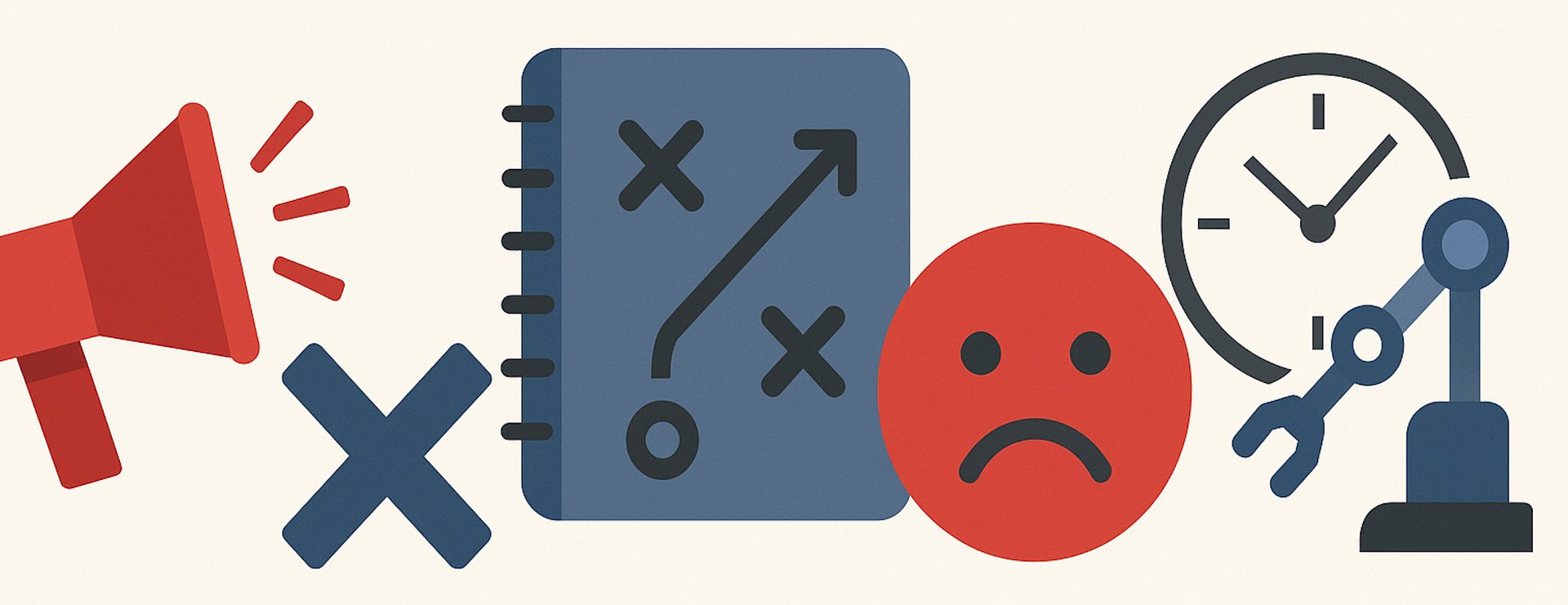
Most sales teams are still running a model built for a different era: manual outreach, gut-feel forecasting, and generic messaging pushed through bloated tech stacks. The result is predictable: burned-out reps, missed targets, and buyers who feel spammed instead of supported.
1. Volume over relevance
Teams are still rewarded for activity, not impact. More calls, more emails, more demos — even as response rates decline. Reps default to spray and pray because they don’t have the time or insight to be truly targeted.
2. Static playbooks in a dynamic market
Playbooks are written once and followed for years, while buyer behavior, competition, and market conditions change monthly. Reps end up guessing which message or sequence will work instead of learning in real time from performance data.
3. Human time wasted on machine work
Highly paid sellers spend huge chunks of their week updating CRM, researching prospects, building lists, and rewriting similar emails. The most expensive part of the revenue engine is doing work that software can now do better, faster, and more consistently.
Why AI-Assisted Selling Is the New Model
AI doesn’t replace the salesperson; it replaces the noise around them.
Personalization at scale — AI can analyze signals like industry, tech stack, intent, and behavior to generate targeted outreach in seconds. Reps get 1:1-quality messaging at 1:many scale.
Real-time learning and optimization — Instead of guessing which subject line, call opener, or sequence will perform, AI can test, learn, and refine continuously. Winning patterns are discovered automatically, not debated in quarterly reviews.
Freeing reps to actually sell — When AI handles research, drafting, data entry, and next-best-action suggestions, reps can focus where they add the most value: live conversations, discovery, and closing.
The future sales model is simple: human judgment + AI leverage. Reps become advisors and orchestrators, not task machines.
3-Step Checklist: Is Your Sales Process Ready for Modernization?
Use this short checklist to evaluate whether your current sales process is ready for AI-assisted modernization.
1. Activity vs. Impact
Are your core KPIs still focused on dials, emails, and meetings instead of pipeline quality, win rates, and deal velocity?
Do reps feel pressure to “do more” rather than “do smarter”?
If so, your model is activity-driven and a strong candidate for AI-driven optimization.
2. Manual vs. Intelligent
How much time do reps spend each week on research, data entry, list-building, and repetitive writing?
Are sequences and messaging updated based on real-time performance data, or mostly on opinions and anecdotes?
If manual work dominates, AI can immediately reduce friction and surface better insights.
3. One-Size-Fits-All vs. Adaptive
Are you sending mostly generic messaging by persona or segment?
Can your system automatically adjust messaging, cadences, and next steps based on buyer behavior and intent signals?
If your process looks the same for most prospects, you’re not yet operating an AI-assisted, adaptive motion.
Modernizing your sales model isn’t about bolting on another tool. It’s about redesigning the process so that AI does the heavy lifting, and your people do what only they can: build trust, solve real problems, and close business.