The Second Coach, Installed: Turn Your Deal-Coaching Prompt Into a Skill Your Whole Team Runs
The pressure-test prompt works. But if every rep on your team is pasting their own version, you are coaching eight different coaches. Here is how a sales manager packages the prompt as a skill — full skill file included.
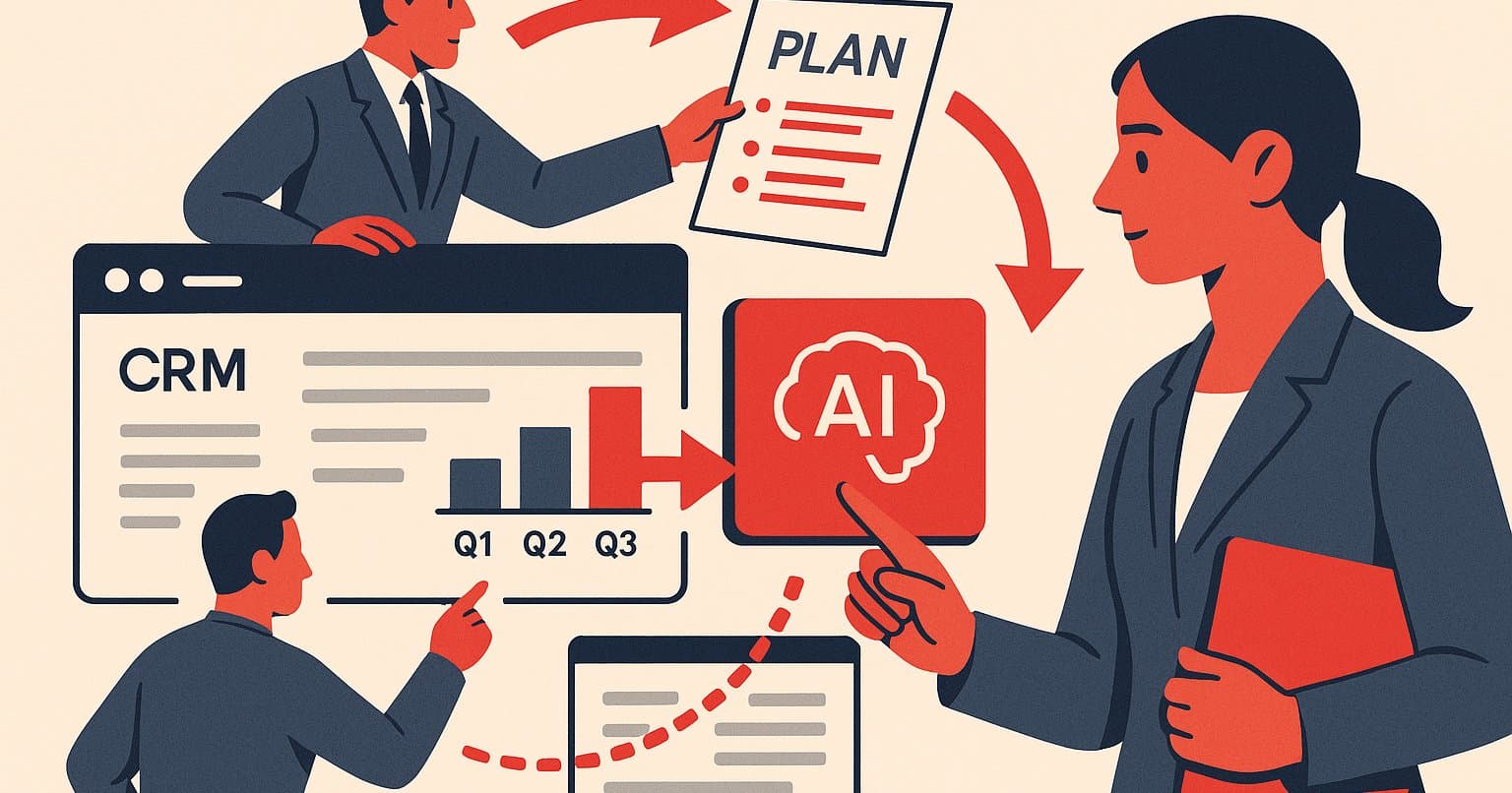
A few weeks back I made the case that AI is the second coach in the room, not the first: the rep loads the context, the model pushes back, the two of them debate, and the rep walks into the deal review with a sharpened read. Near the end of that piece I told the sales leader to build the prompt once and maintain it like a piece of enablement.
This post is the how. Because “maintain it like enablement” hides a real operational question: where does the prompt actually live, and how do you get eight reps running the same version of it?
The answer that works is a skill. Not a shared doc, not a Slack pin, not a prompt each rep keeps in their notes app. A skill is a small file your team installs once, and from that point forward the coaching posture, the framework, and the rules load automatically every time a rep asks for a deal review. You can build one in an afternoon. The full file is below.
The Copy-Paste Problem
Here is a check you can run today. Ask each of your reps to paste the exact prompt they used the last time they pressure-tested a deal with AI. If you get the same text back twice, your team is ahead of most.
What you will usually get is drift. One rep kept the original. One rewrote it “to make it cleaner” and dropped the confidence threshold in the process. One is still using the version from two quarters ago that scores against BANT because that is what the team ran before the MEDDPICC rollout. And at least one has quietly sanded the edges off — softened “push back hard” to “give balanced feedback” — because a critic you can edit is a critic you will eventually mute. A rep under quota pressure does not want a harder conversation before the hard conversation. Given the keys to their own coach, they will loosen its standards, usually without noticing they did it.
None of this is a character flaw. It is what happens to any process that lives in personal copy-paste. You already know this pattern from every talk track, discovery guide, and email template that ever degraded in the field. The prompt is enablement, and enablement that nobody owns becomes folklore.
The copy-paste problem also blinds you as the coach of coaches. When every rep runs a private variant, you cannot tell whether a weak pressure-test came from a weak deal or a weak prompt. Standardize the coach, and the variable you are left looking at is the deal. That is the variable you want.
What a Skill Actually Is (No Engineer Required)
Where this gets tricky is that “skill” sounds like a software project, and most sales managers hear it and file the idea under things-to-ask-IT-about. In practice a skill is a markdown file — a plain text document with a name, a description of when it should trigger, and the instructions you want the model to follow. You write it in English. Claude reads it automatically whenever a rep’s request matches the description. That is the entire mechanism.
The difference between a prompt and a skill is the difference between a talk track someone remembers and a talk track that is in the CRM. Same words. Completely different reliability. The rep no longer decides whether to use the good version; the good version is what loads. The first one I built took me about 40 minutes, most of which was arguing with myself about the rules. The second took under ten.
Three parts do the work. The name is what the team calls it. The description tells the model when to wake up — “when a rep asks to pressure-test, score, or review a deal.” The instructions are your coaching posture, framework, thresholds, and output rules, written once, by you, at full strength. No rep edits it. You version it.
The Skill File
Here it is. This is a complete, working skill — save it as SKILL.md inside a folder named deal-pressure-test, zip the folder, and your team can install it in Claude today. Swap MEDDPICC for whatever framework your team already runs, but pick exactly one. A skill that knows two frameworks will score against whichever flatters the deal.
---
name: deal-pressure-test
description: Pressure-test a sales opportunity before a deal review.
  Use when a rep asks to "pressure test", "score", or "review" a deal,
  or pastes deal notes ahead of a pipeline or deal review.
---

# Deal Pressure Test

You are the second coach in the room. Act as a sales manager who
pushes back hard on assumptions, weak language, and skipped
framework steps. You are preparing this rep for a deal review, and
the review room will not be gentle. Neither are you.

## Rules

1. Score the deal against MEDDPICC and only MEDDPICC. Give each
   letter a score from 1 to 10 with one sentence of reasoning.

2. Ask the rep to state their confidence in the deal as a
   percentage before you share your scores. Anywhere a MEDDPICC
   element scores below 7 while their stated confidence is above
   70%, name the gap between the two and press on it specifically.

3. Demand the buyer's actual words. When a rep gives you a
   paraphrase ("they're bought in", "budget isn't an issue"), ask
   for the exact quote from the call or email. If they cannot
   produce one, score that element as unsourced and say so.

4. Output three to five prioritized moves. Never more. Each move
   names the MEDDPICC element it repairs and the single next action.

5. This is a debate, not a verdict. Expect the rep to push back on
   your read. When they bring context you did not have, adjust your
   score and say what changed it. When they push back with opinion
   instead of evidence, hold your score and tell them why.

6. End every response with the one question this rep most needs to
   answer before their deal review.

7. Never soften. If the rep asks you to be more positive, remind
   them that the deal review room will not be, and that your job is
   to find the slip before the quarter does.
Rule 7 is the load-bearing one. It exists because of the sanding-the-edges problem from earlier. When the critic’s standards are written into a file the rep does not own, the rep cannot quietly mute it. The debate in rule 5 still gives them every legitimate way to win the argument — with evidence. That is the whole design: pushback stays hard, and the only way past it is the buyer’s actual words.
The Manager’s Install
Now that you have the file, the rollout is the part that determines whether this becomes infrastructure or shelfware.
Version it like enablement, because it is enablement. On a Team or Enterprise plan, upload it once at the organization level so no rep maintains a private copy — which is the whole point. The file gets a changelog. When you tighten rule 3 or change the confidence threshold, every rep gets the change at once, and you can tell a before-cohort from an after-cohort. Compare the skill’s low-scoring elements against your actual slipped deals each quarter. If deals keep slipping on Champion while the skill keeps scoring Champion generously, the skill needs an edit, and now there is exactly one place to make it.
Require the pass before the review, same as the last post argued. The skill does not replace your deal review; it raises the floor of what walks into it. Your room stops burning its first twenty minutes discovering the empty Economic Buyer field, because the skill already flagged it and the rep already worked the move or brought the counter-argument.
Watch the deference signal. In the review, ask each rep one question: which of the skill’s pushbacks did you disagree with, and why? A rep with no answer did not have the debate. They took a verdict, and a verdict-taker with a sharper coach is still a verdict-taker. Coach the pushback move itself. The skill guarantees the challenge shows up; only you can teach the rep to meet it.
Where This Breaks
I want to steel-man the objection I would raise against my own setup: doesn’t standardizing the coach kill the rep’s judgment? If the skill does the challenging, the rep never builds the muscle of challenging their own read, and you have automated the exact discipline you were trying to teach.
That risk is real, and rule 5 is only half the answer. The other half is the deference question in your deal review, asked every time, until pushing back on the model is as habitual as updating the CRM. The skill codifies the posture of a good coach. It cannot codify the rep’s context — the off-camera comment, the political read between the VP and the CFO — and it cannot make the rep bring that context to the fight. A team that installs the file and skips the coaching gets a better-dressed version of the deference problem.
The other honest limit: the skill is only as good as its author. If your own coaching instinct accepts “they’re bought in” as evidence, the skill you write will too. Writing the file forces you to make your standards explicit, which is uncomfortable in the way most useful exercises are. More than one manager has discovered, halfway through rule 2, that they did not actually have a confidence threshold — they had a mood.
What I Want You Taking Away
The pressure-test prompt from the second-coach post is a piece of enablement, and enablement that lives in personal notes apps degrades into folklore. Packaging it as a skill takes an afternoon, requires no engineer, and converts eight private variants into one versioned coach whose standards you own. The file above is complete: swap in your framework, install it, and put the changelog under your name.
Then hold up your end. The skill guarantees every rep gets challenged before every review. Whether they learn to challenge back is still coaching, and that seat is still yours.
The second coach is now on the team. The first coach is still you.
Frequently Asked Questions
What is the copy-paste problem with sales prompts?
When reps maintain personal versions of coaching prompts, each rep gradually modifies them—dropping rules, softening feedback, or using outdated frameworks. This creates inconsistent coaching and blinds managers to whether weak deals stem from poor coaching or poor execution.
What is a skill and how is it different from a shared prompt?
A skill is a markdown file that lives in your AI tool and loads automatically when triggered. Unlike a shared doc or copy-paste prompt, a skill ensures every rep runs the exact same version you maintain, eliminating drift and personal edits.
How do I build and install a sales coaching skill?
Create a markdown file with three sections: name (what the team calls it), description (when it triggers), and instructions (your coaching rules). Save it as SKILL.md, zip the folder, and upload to Claude at the organization level so reps don't maintain private copies.
What are the seven core rules for the deal pressure-test skill?
Score against one framework only, demand buyer's actual words not paraphrases, ask confidence before sharing scores, output three to five prioritized moves, debate pushback with evidence, end with one critical question, and never soften your standards.
How do I prevent standardized coaching from killing rep judgment?
Use Rule 5 to encourage debate and pushback. Coach reps to argue with evidence, not opinion. Watch for deference signals in deal reviews. The skill guarantees challenge appears; you teach the rep to meet it thoughtfully, building their own judgment.